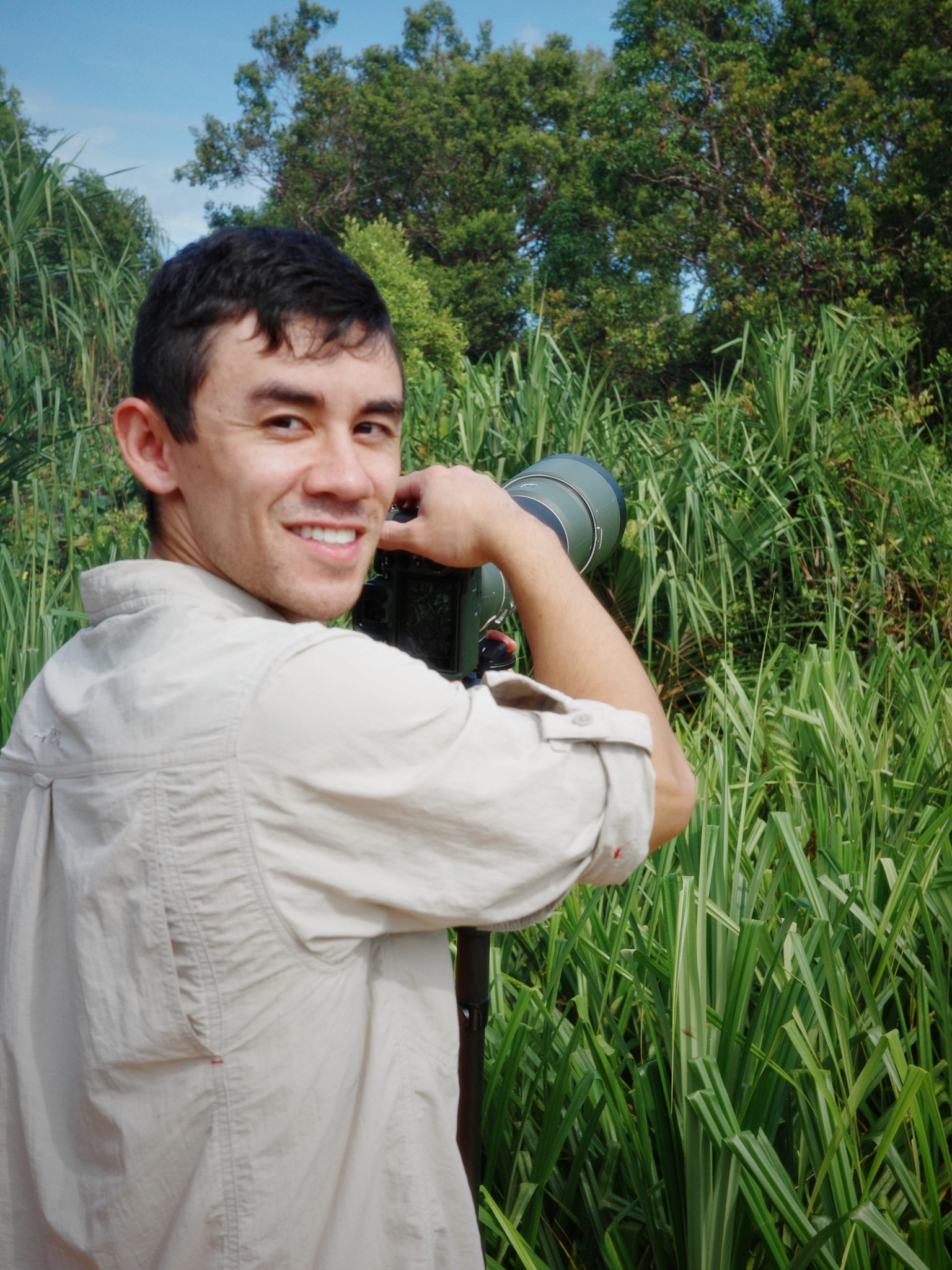
My camera is from 2021. It's the Sony a7 IV, and it's already a little dated.
But a handful of its features get me the shot on every safari, whether the animal is moving fast, the light is going or I’m holding a phone in the other hand.
This guide covers those features so you can look for them in any brand: Sony, Canon, Nikon or Fuji. Then what I want in my next camera, and the bodies I’d shortlist, with prices. It’s the written version of my YouTube video, which shows every feature on screen.
What to look for at a glance
These are the features that matter most on a game drive.
Megapixels: around 33MP or more, so you can crop in on distant animals.
Dials and custom buttons: shutter, aperture and exposure under your fingers.
A mode dial with custom settings: saved setups for normal, slow motion and low light.
A photo and video switch: jump between the two without a menu.
Focus you can steer: a joystick, tap to focus and animal eye autofocus.
More than one card slot: room for a second card.
Weather sealing: for the rain and, just as much, the dust.
Lenses for the mount: check the lens you want exists before you buy the body.
Megapixels: room to crop
Animals are always further away than you’d like, even with a long telephoto lens.
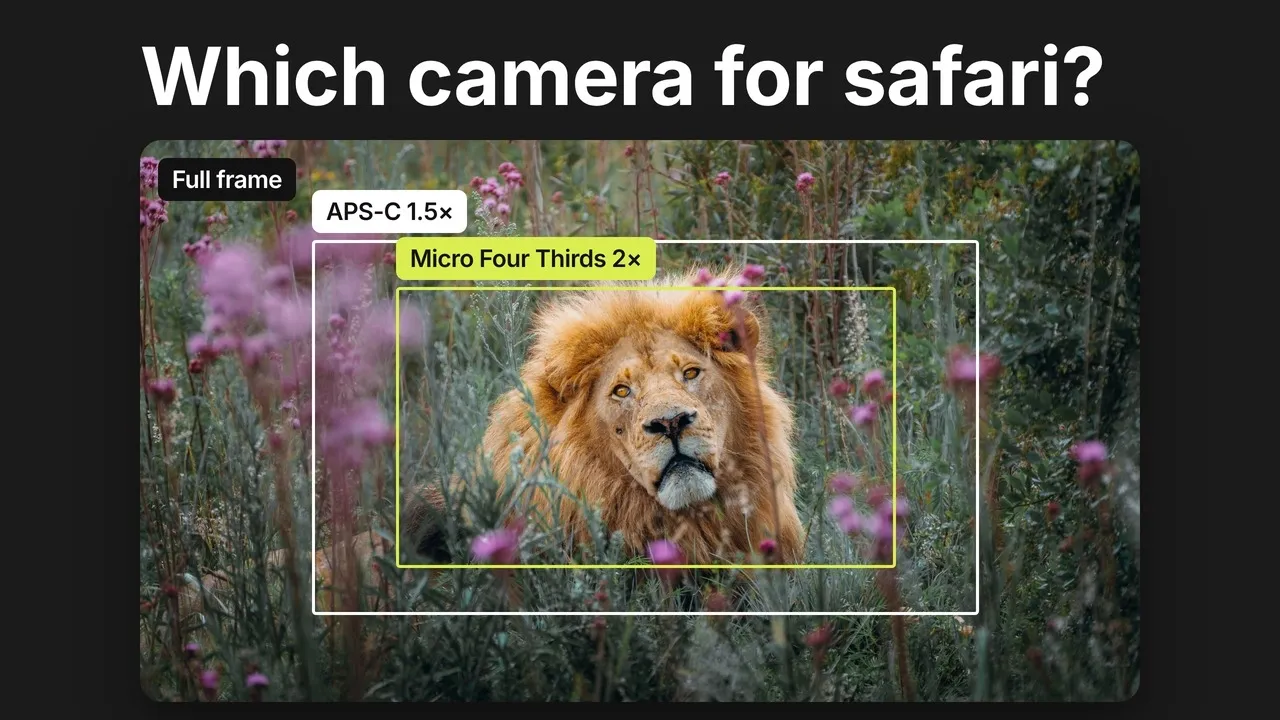
More megapixels let you crop in and keep the resolution. The old standard was 24MP. My a7 IV has 33MP, a big jump, and the newest bodies go up to around 60MP.
Every photo I take is 33MP. If you like how they look, aim for something similar.

The white box shows how far you can crop into a 33MP photo and still have a usable image.
Dials and custom buttons
Everything that matters should sit under your fingers, so you never take your eye off the animal.
Front dial: shutter speed.
Rear dial: aperture, so how much light comes in and how soft the background gets.
Exposure dial: I shoot on auto ISO a lot. This dial makes the picture a little brighter or darker with my thumb.
Scoped in on an animal, you can feel your way round the camera and still get the shot.

Nudge the exposure dial and the meter moves. Auto ISO follows, so the lion gets brighter or darker without a menu.
A mode dial with custom settings
Some compact bodies, like the Sony ZV-E1 and FX3, skip the mode dial, so you change settings in a menu.
A dial with custom slots means the camera is ready the moment you turn it on. Mine has three:
Setting 1: standard 30 frames per second.
Setting 2: 60 frames per second for slow motion.
Setting 3: low light, for night drives and twilight.

A photo and video switch
The a7 IV has a switch to flip between photo and video, an upgrade over my old a7 III. Each mode keeps its own custom settings, so both are ready for birds, a cheetah at midday or a night drive.
On a sighting, take your photos first, then flip the switch and film.
The real point is one hand. You might be filming on your phone with the other, or digging for a spare battery or card, and you still don’t lose the shot.

Focus you can steer
Good focus tools are non-negotiable on safari.
Joystick: move the focus box with your thumb while looking through the viewfinder. Put it on the eye, or follow an animal moving through grass.
Tap to focus: if you shoot off the back screen, tap the subject and the camera tracks it.
Eye autofocus: a must, along with subject tracking in video. The green box locking onto an eye in wildlife videos is eye autofocus at work.

The focus area menu sets how the camera picks a subject. Spot puts a small frame exactly where you steer it with the joystick.
My a7 IV makes you choose between bird, human and animal eye detection. Newer bodies recognise animals, birds, people, insects and vehicles in one setting, so there’s nothing to switch.

Card slots and weather sealing
Card slots: the a7 IV has two. Both take SD cards, and one also takes CFexpress. I’ve never used CFexpress, but it’s the standard on newer cameras.
Weather sealing: a must on safari, and one of the first specs I check.
Rain is the obvious reason. Go in December and it’s often the rainy season, and I’ve pulled my camera out in plenty of downpours to catch a sighting.
The dry season matters just as much. Dust gets everywhere, and dust inside the camera ruins every image after it.

Check the lenses before the body
Research which lenses exist for a camera before you buy it. I chose Sony for the range: native Sony lenses plus third-party ones from Tamron and Sigma.
Sony 200-600mm: a must for wildlife, and my long lens.
Tamron 35-150mm: one of my favourite lenses ever, for closer sightings.
Tamron 17-28mm: vlogging and close-ups, any time I’m not shooting animals.
Check the sensor size too. Lenses are made for a mount and sensor size, and they don’t always cross over, even within one brand.

The leopard on the right was shot on the Tamron 35-150.
What I want in my next camera
Not a Sony ad, just the features I’d buy for next.
Dynamic Active stabilisation: Sony’s stabilisation that makes handheld footage look like it came off a gimbal. I used it on the a9 III. In a safari vehicle any small movement from the person next to you shakes the shot, and a long lens in low light makes it worse.
9:16 guides: two lines in the viewfinder that show what’s in frame for vertical. Film horizontally for YouTube and the same clip still frames properly for Instagram.
AI autofocus: better eye tracking and more subjects recognised, with no switching between birds, animals and people.


Those guides are how one horizontal clip becomes a YouTube shot and an Instagram reel.
Cameras worth a look
All Sony except one, because Sony is what I know. Prices are body only, in US dollars from B&H on 1 Nov 2026, so check them before you buy.

Sony a6700, $1,498: a small APS-C walk-around camera for beginners and prosumers. It packs a lot of Sony’s best features and shares its sensor with the FX30 cinema camera.
Sony a7 III, about $1,000 used: the camera I had before the a7 IV. Buy it used to save money. The eye autofocus is a step behind, but it’s a solid camera.
Sony ZV-E1, $2,198: video first, with the same sensor as the FX3, so it’s very good in low light. The catch for safari is sealing: it’s only dust and moisture resistant, a step below the a7 IV, so bring a rain cover. It also has 12MP for photos, one card slot and fewer dials, which matters less if you only shoot video.
Nikon ZR, $2,197: video focused, with a big rear screen and colour profiles from RED, the cinema camera brand. Small and good looking. I’d have to swap all my lenses to try it.
Sony a7C II, $2,198: close to the a7 IV, but compact with no viewfinder, so it’s smaller and lighter in the bag. I’ll probably get the a7C III when it’s announced.
Sony a7 V, $2,898, or a7R V, $3,298: if you want a viewfinder. The R means more megapixels. True workhorses.
Sony A1 II, $6,998, or the a9 series: the best you can get, with every bell and whistle. If you can afford one, I’m jealous.
My safari kit
Affiliate links. I gain small commission when you purchase from these links at no extra cost to you.
Camera: Sony a7 IV
Long lens: Sony FE 200-600mm F5.6-6.3 G OSS
Close sightings: Tamron 35-150mm F2-2.8 Di III VXD
Vlogging: Tamron 17-28mm F2.8 Di III RXD
Features over specs. Pick the camera that fits your budget and how you shoot, on safari or photographing birds in the backyard. Lenses for safari are next.
Until then, happy shooting.